
NEW YORK, May 6, 2026 — Indigenous leaders, diplomats and United Nations officials convened in New York for the Second Global Summit on Indigenous Peacebuilding, issuing a call to reframe global peace and security efforts by placing Indigenous Peoples at the center of conflict prevention and resolution.
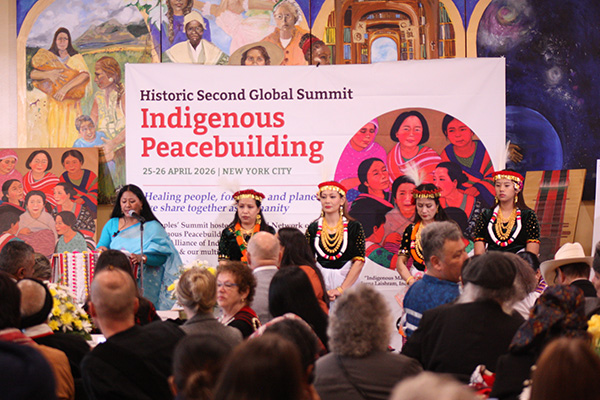
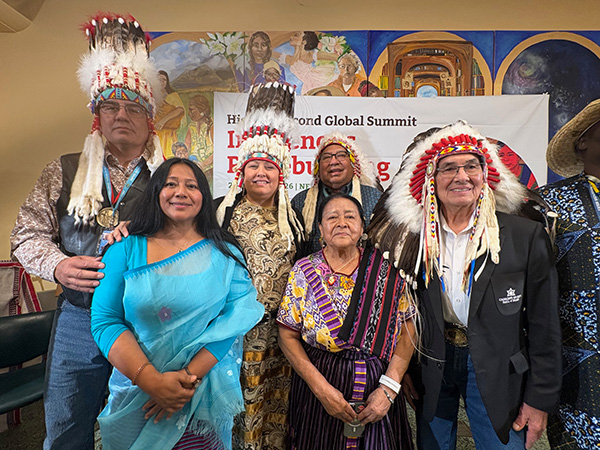
Held in New York City on April 25–26, 2026, the two-day summit gathered 300 representatives from 80 countries and seven socio-cultural regions of the world amid growing concern that a majority of the world’s conflicts occur in biodiversity-rich areas inhabited by Indigenous Peoples.
 |
 |
Organizers said the summit has already influenced international policy discussions. The United Nations Permanent Forum on Indigenous Issues referenced the event and its recommendations in its 2026 outcome document, including a proposal to declare 2027–2037 an International Decade of Indigenous Peacebuilding.
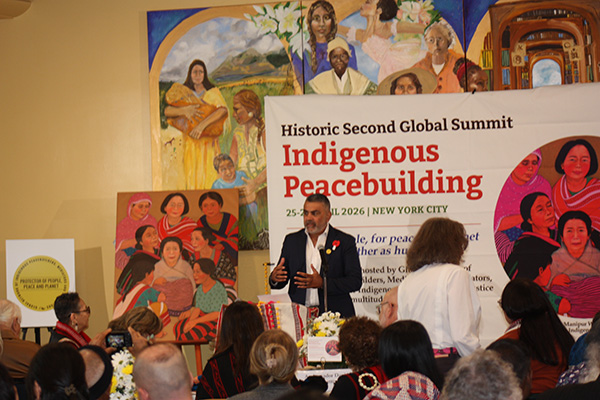
Opening the Summit, Binalakshmi Nepram, Founder-Director of Manipur Women Gun Survivors Network and President of the Global Alliance of Indigenous Peoples, Gender Justice and Peace, called for a fundamental shift: “It is time to move from seeing Indigenous Peoples as victims of conflict to recognizing them as experts, mediators, and negotiators of peace.”
The Summit built on the outcomes of the first global gathering, which led to the first-ever declaration on Indigenous Peacebuilding and the creation of a Global Network of Indigenous Peacebuilders, Mediators and Negotiators to help resolve some of the world’s most entrenched conflicts.
A series of global initiatives were launched at the gathering, including the Global Indigenous Mothers March for Peace, Healing and Unity, the recognition of an innovative and much-needed Indigenous Humanitarian Peacebuilding (IHP) Model to respond directly to survivors in war and conflict zones, a forthcoming book on Indigenous Peacebuilding, and the rollout of online and in-person curriculum programs to train Indigenous peacebuilders worldwide.
 |
 |
A central feature of the summit was the Weaving for Peace exhibition, which brought together traditional textiles from Indigenous communities across Manipur, Guatemala, Papua New Guinea, Bolivia, the Haudenosaunee, the Sámi region, Maasai Regions, Amazon and the Sahel, highlighting cultural resilience as a foundation for peace.
Speakers pointed to rising global displacement—estimated at around 200 million people—with many conflicts linked to resource extraction, environmental degradation and transnational organized crime affecting Indigenous territories with huge humanitarian consequence. Aluki Kotierk, Chair of the United Nations Permanent Forum on Indigenous Issues, underscored the role of Indigenous knowledge systems rooted in balance and reciprocity. “Indigenous Peoples must be recognized not as security threats, but as part of the security infrastructure,” said Dr Albert Barume, United Nations Special Rapporteur on Indigenous Issues, framing Indigenous peacebuilding as a matter of international peace and security.
Justin Mohammad, Ambassador for First Nations People, Australia, said Indigenous diplomacy has long shaped relations across regions and should be integrated into modern peace processes.
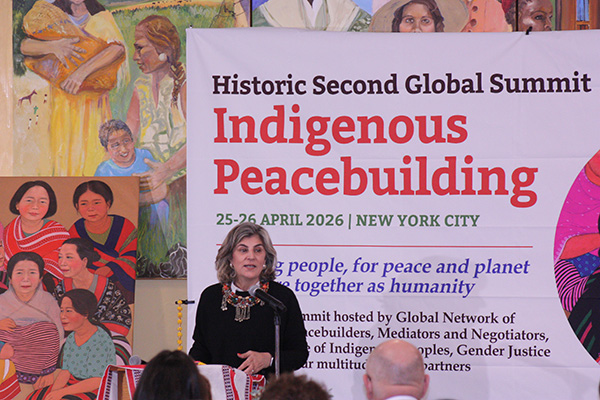
“When multilateral institutions are being questioned, we need governance—but we must humanize it,” said Laura Gil, Assistant Secretary General of the Organization of American States. Omar Hilale, Permanent Representative of Morocco to the United Nations and Chair of the United Nations Peacebuilding Commission, emphasized the need for inclusive peacebuilding approaches that incorporate Indigenous knowledge and local leadership.
Laura Flores Director of Americas Division of the United Nations Department of Political and Peacebuilding Affairs also joined and stated, “member states are increasingly recognizing Indigenous Peoples’ role in peacebuilding, including through a landmark resolution on Indigenous Peoples’ rights and their role in peacebuilding, negotiations, and transitional justice.”
Ana Pérez Conguache, representing the Guatemala Presidential Commission, highlighted the importance of addressing land rights, inequality and historical injustices as part of sustainable peace.Ambassador David Lametti, Permanent Representative of Canada to the United Nations also spoke at the Summit pledging support for Indigenous Peacebuilding.
Many scholars and leaders from conflict affected regions such as Dr Noni Arambam, Maisnam Arnapal, Adam Kuleit Ole Mwarabu, Daniel Mastaki from DRC, Nuba Mountain and many others also spoke.Participants concluded with a shared message: that the world’s Indigenous Peoples are the world’s peacemakers; that wars and conflicts currently engineered in Indigenous territories must end immediately; and that Indigenous Peoples who are displaced must be protected.
That justice, inclusion, and the leadership of Indigenous Peoples—their peacemaking and their wisdom—hold the key for healing people, for peace and the planet, and it’s time UN member states and the world realize and ensure this in policy, planning, action, and resourcing. Photos from the Summit are attached.Contact: Media/Global Network of Indigenous Peacebuilders, Mediators and Negotiators/ Alliance of Indigenous Peoples, Gender Justice and Peace
Email: newyorksummit@
https://www.